Why Two Tacoma Buildings With the Same Age Can Have Completely Different Inspection Risks
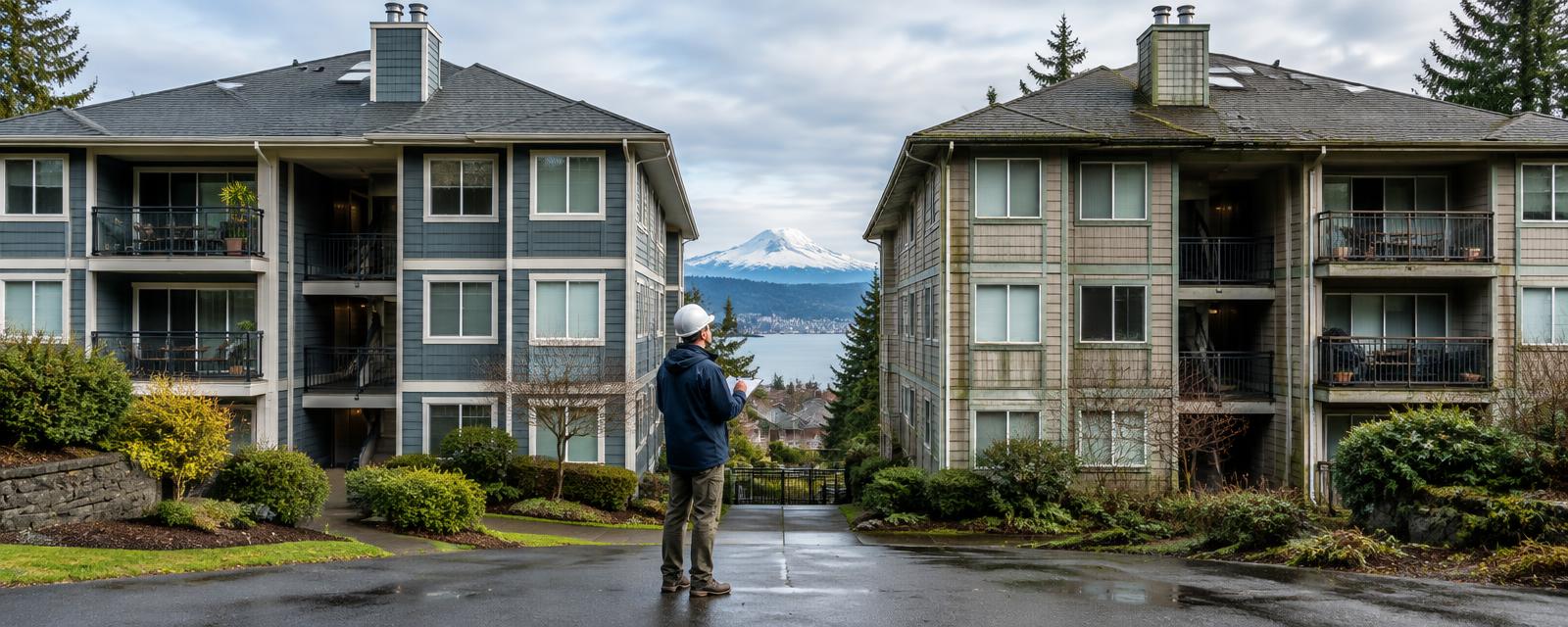
Two buildings in Tacoma can have the same construction year and still present very different inspection risks. Age provides useful background information, but it does not explain how a building has performed throughout its service life. Exposure to moisture, quality of original construction, maintenance practices, renovations, occupancy patterns, and previous repairs can all change the condition of major building components. A property that has received consistent maintenance may remain in strong condition decades after construction. Another building of the same age may have hidden deterioration because small problems were repeatedly postponed or addressed without solving their underlying causes. For property owners, investors, and buyers, understanding this difference is essential when evaluating the true condition and potential obligations associated with a Tacoma building.
Construction Quality Can Create Different Outcomes
The materials and workmanship used during original construction can strongly influence how a building ages. Buildings constructed during the same period may have different contractors, architects, materials, site conditions, and construction details. One structure may have benefited from careful installation and effective water management, while another may contain details that were more vulnerable to premature deterioration. Even seemingly minor differences in flashing, drainage, roofing installation, exterior assemblies, or structural connections can become significant over time. These differences may not be obvious during a casual walkthrough because deterioration often develops inside wall assemblies, around openings, beneath roofing systems, or in areas that receive limited attention. Our inspection approach therefore considers how a building was constructed and how its components have performed rather than treating its age as a standalone indicator of condition.
Tacoma Weather Can Affect Buildings Differently
Local environmental exposure is another reason buildings of identical age can develop very different inspection profiles. Tacoma properties can experience substantial rainfall, persistent moisture, seasonal temperature changes, wind exposure, and extended periods of damp conditions. However, the effects of that environment are not necessarily distributed evenly across every property. A building positioned differently on its site may receive different amounts of wind driven rain, while variations in grading and drainage can determine whether water moves away from or toward the structure. Orientation, surrounding trees, neighboring buildings, roof configuration, exterior materials, and site drainage can all influence how moisture interacts with a property. Over many years, these differences can contribute to substantially different levels of exterior deterioration, water intrusion, biological growth, corrosion, or material degradation even when two buildings were constructed in the same year.
Maintenance History Changes the Inspection Picture
Maintenance history is one of the most important factors separating two otherwise similar properties. Regular roof maintenance, timely exterior repairs, functional drainage systems, properly maintained mechanical equipment, and prompt correction of water intrusion can significantly influence long term building performance. Conversely, deferred maintenance can allow relatively minor defects to develop into expensive conditions that affect multiple building systems. A roof leak that was ignored for several years may eventually affect insulation, decking, framing, ceilings, finishes, and interior spaces. Similarly, a small drainage problem can contribute to persistent moisture around foundations or exterior walls if it is not corrected. During an inspection, we look beyond visible age related wear and consider whether the property appears to have been responsibly maintained over the course of its service life.
Renovations Can Introduce New Inspection Risks
Renovations create another major variable when comparing buildings of the same age. A property may have started with one set of construction systems but now contain additions, remodeled spaces, replacement windows, updated roofing, modified electrical systems, upgraded plumbing, or structural alterations. Some renovations improve a building substantially, while others can introduce compatibility problems or installation deficiencies. Older components may also remain adjacent to newer work, creating transitions that require careful evaluation. Changes made without appropriate planning or documentation can make it more difficult to understand how individual systems interact. This is why the inspection history of a property cannot be understood simply by looking at its original construction date, because significant changes may have occurred throughout the building's lifetime.
Occupancy and Building Use Matter
The way a building has been used can also influence its current inspection risks. Two buildings with identical construction dates may have experienced completely different levels of occupancy, traffic, equipment use, environmental exposure, and interior modifications. A lightly occupied property may experience relatively limited wear in certain areas, while a heavily used commercial building can place greater demands on flooring, doors, plumbing fixtures, mechanical equipment, electrical systems, and other components. Certain types of occupancy may also create specialized environmental conditions that affect building materials and equipment. Frequent tenant improvements can result in repeated modifications to walls, ceilings, utilities, and other systems. Understanding the property's history and current use therefore provides important context when evaluating whether observed conditions represent ordinary aging or more significant performance concerns.
Site Conditions Can Change Structural Risk
The ground and surrounding site conditions deserve careful consideration because buildings do not exist independently of their sites. Drainage patterns, soil characteristics, slope, landscaping, neighboring development, retaining structures, and changes to surrounding grades can influence how water and loads interact with a building. A property that has experienced changes in its surrounding landscape may perform differently from another building of the same age located on a more stable or better drained site. Persistent moisture near foundations can create concerns that would not be apparent from the building's construction date alone. Cracks, settlement indicators, uneven surfaces, or drainage deficiencies can have different significance depending on the broader site conditions. A thorough property assessment therefore considers the relationship between the structure and the land supporting and surrounding it.
Roof Design and Exposure Can Make a Major Difference
Roof systems often demonstrate why construction age alone cannot predict inspection risk. Two buildings built in the same year can have completely different roof shapes, drainage arrangements, materials, penetrations, maintenance histories, and exposure levels. A roof with effective drainage and regular maintenance may perform well for many years, while another roof of similar age may have repeated leaks or deteriorated components. Flat and low slope roof assemblies can require particular attention to drainage, membrane condition, penetrations, flashing, and ponding water. Sloped roofing systems have their own inspection considerations involving roof coverings, valleys, flashing, ventilation, and drainage. Because roof performance can affect numerous interior and structural components, differences in roof design and maintenance can create substantially different inspection findings between otherwise comparable Tacoma properties.
Exterior Materials Do Not Age at the Same Rate
The exterior envelope is another area where two buildings of the same age can diverge significantly. Siding, masonry, stucco, sealants, windows, doors, flashing, and exterior trim each respond differently to weather and maintenance. Some materials may remain serviceable for decades when properly installed and maintained, while others can develop deterioration at vulnerable joints or transitions. Repeated exposure to moisture can make small defects more consequential over time, particularly when water reaches concealed assemblies. Poorly maintained sealants or flashing can allow moisture to enter locations that are difficult to observe during a basic visual review. Evaluating the exterior therefore requires attention to material type, installation details, exposure, repairs, and evidence of previous moisture problems rather than relying primarily on the building's age.
Mechanical Systems Can Follow Different Lifecycles
Heating, cooling, ventilation, plumbing, and other mechanical systems may also have replacement histories that differ dramatically from the building itself. A thirty year old building does not necessarily have thirty year old mechanical equipment. Major systems may have been replaced several times, partially upgraded, or left in service well beyond their expected useful lives. Replacement equipment can also vary considerably in quality, installation, capacity, efficiency, and maintenance requirements. An inspection should identify the apparent age and condition of relevant equipment while considering whether modifications have affected the performance of connected systems. Looking only at the age of the building could therefore create a misleading impression about the actual condition and remaining service expectations of its mechanical infrastructure.
Electrical and Plumbing Modifications Add Complexity
Electrical and plumbing systems frequently evolve as properties change ownership, occupancy, and function. Additional circuits, equipment, fixtures, tenant improvements, remodeling projects, and replacements may have been introduced over many years. Some changes may be professionally completed and integrated into the existing systems, while others may create conditions that require closer evaluation. Older portions of a system may coexist with newer components, making it important to understand what has been modified and what remains original. Plumbing leaks, outdated components, improper connections, inadequate drainage, or electrical deficiencies may not correspond neatly with the building's age. A property inspection must therefore evaluate the systems that actually exist today rather than assuming that two buildings constructed during the same year contain comparable infrastructure.
Hidden Conditions Can Create the Biggest Differences
One of the most important reasons inspection risk varies between buildings is that some significant conditions are concealed. Moisture can exist behind finishes, deterioration can occur beneath roofing materials, and structural concerns can develop inside assemblies that appear intact from the outside. Previous repairs may also conceal evidence of recurring problems without addressing the source of the issue. This does not mean that every concealed condition represents a defect, but it does mean that visible appearance should not be the only factor used to assess property risk. Signs such as staining, unusual odors, cracking, deteriorated materials, drainage problems, or inconsistent repairs can provide valuable clues about conditions that deserve further attention. Our inspections focus on identifying observable evidence and connecting individual findings to the broader history and performance of the property.
Why Professional Inspection Requires More Than a Checklist
A checklist can help organize an inspection, but meaningful property evaluation requires professional judgment and an understanding of how building systems interact. A roof issue may be connected to interior moisture, while a drainage deficiency may contribute to exterior deterioration or foundation concerns. Similarly, a renovation may affect several systems at once rather than representing an isolated change. The significance of a finding depends on its location, severity, extent, likely cause, and relationship to other conditions. This is particularly important for commercial and investment properties where inspection findings can influence maintenance planning, negotiations, budgeting, and long term ownership decisions. A professional assessment should therefore provide context instead of simply producing a collection of disconnected observations.
Comparing Tacoma Properties on Their Actual Condition
When evaluating two buildings of the same age, it is more useful to compare their actual condition and histories than to assume that their risks are equivalent. Important considerations include construction quality, maintenance records, renovation history, environmental exposure, occupancy, site conditions, roof performance, exterior assemblies, mechanical systems, electrical infrastructure, plumbing, and evidence of previous problems. These factors create a building specific risk profile that cannot be accurately predicted from the construction year alone. A property with excellent maintenance and carefully executed upgrades may present fewer immediate concerns than a newer property with extensive deferred maintenance or unresolved water intrusion. Conversely, an older building may contain aging components that require proactive planning even when no major defect is immediately visible. Understanding these distinctions gives owners and prospective buyers a more realistic basis for deciding what deserves attention now and what should be incorporated into future capital planning.
Making Better Property Decisions Through Detailed Inspection
Building age remains useful because it provides historical context and can help identify systems that may warrant closer attention. However, it should be treated as one data point rather than a complete measure of inspection risk. Every property develops its own history through construction, weather exposure, maintenance, alterations, occupancy, repairs, and changing site conditions. We evaluate these factors together to help provide a more informed understanding of a property's present condition and potential areas of concern. For owners and investors in Tacoma, this approach can make inspection findings more useful for budgeting, maintenance planning, due diligence, and long term asset management. The most valuable inspection is not simply the one that identifies what is old, but the one that helps explain what matters, why it matters, and what should be considered next.
Need Professional Guidance?
Bach Associates provides expert reserve study and construction management services for Washington associations.